
STOP guessing. START budgeting with confidence. Your most valuable asset your sight deserves the highest level of care. Yet, for many, the cost of a comprehensive eye exam remains a confusing mystery. At Villages Opticals, we believe in absolute transparency and the unparalleled value of precision eye exams.
If you’ve searched “how much is an eye exam” and been frustrated by vague answers, you’ve come to the right place. This is the definitive, authoritative guide to eye exam costs in the Florida, breaking down every factor, from insurance copays to necessary specialty tests.
The average cost of a routine, comprehensive eye exam in the United States ranges widely, from as low as $\text{\$50}$ at discount chains to over $\text{\$250}$ for a specialized new patient appointment. However, providing a single number for how much is an eye exam is often misleading because the price is determined by five critical factors.
At Villages Opticals, we don’t just sell you a number; we sell you Best Corrected Visual Acuity (BCVA) and the peace of mind that comes with a meticulous health screening. Our eye exams are not a low-cost commodity; they are a high-value investment in your long-term health.
Part I: The Core Question How Much Is An Eye Exam at Villages Opticals?
We understand the need for clear pricing. While the final price for how much is an eye exam is always customized to your needs (insurance, contact lenses, medical history), we provide clear benchmarks.
| Villages Opticals Service Type | Typical National Cost Range (Without Insurance) | Villages Opticals Price Transparency | Key Value |
| Comprehensive Eye Exam (Base Price) | $\text{\$100 – \$200}$ | Call for Current Rate: Our fee reflects advanced technology and board-certified expertise. | Includes vision screening, health check, and $\text{Tonometry}$ (eye pressure). |
| Refraction Eye Exam (For Prescription) | $\text{\$20 – \$50}$ (Often billed separately) | Billed Separately: Our meticulous Refraction Eye Exam fee ensures $\pm 0.25$ Diopter precision. | The critical step that answers “Which is better, 1 or 2?” (Often not covered by medical insurance). |
| Contact Lens Exam & Fitting (Add-on) | $\text{\$50 – \$150}$ (Additional to the base exam) | Starts at [Competitive Rate]: Varies based on lens type (e.g., torics, multifocals). | Essential for proper fit, comfort, and safety; requires different measurements than glasses. |
| Advanced Retinal Imaging/Optomap (Optional) | $\text{\$30 – \$60}$ | [Standard Fee]: Recommended for nearly all patients as a health baseline. | Non-dilated, wide-field digital view of the retina for superior disease detection. |
The first step in knowing how much is an eye exam for you is calling our office or using our online booking tool to check your specific vision plan benefits.
Part II: Deconstructing the Price 5 Factors That Determine Your Eye Exam Cost
The ultimate cost is a dynamic equation based on five core variables. Understanding these factors is key to understanding the value of your eye exam.
A. The Type of Eye Exam (Value vs. Price)
The cost of how much is an eye exam primarily depends on what kind of eye exam you receive.
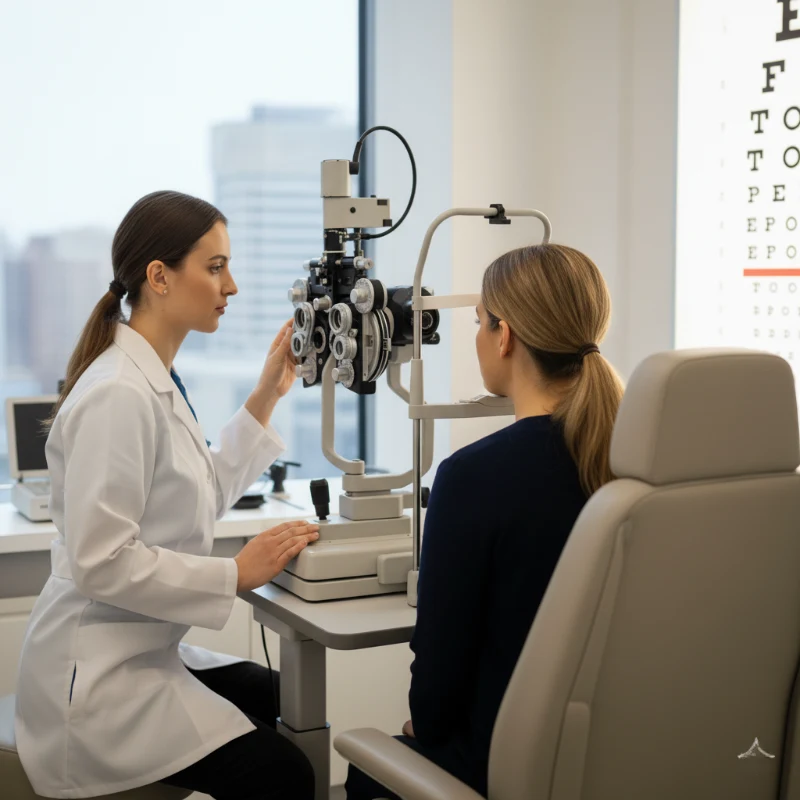
- Comprehensive Eye Exam: This is the gold standard we perform at Villages Opticals. It is a full diagnostic check of your vision and your eye health. It includes visual acuity, refraction (prescription check), Tonometry (glaucoma screening), muscle balance tests, and a thorough check of the retina, optic nerve, and lens for diseases like cataracts, diabetes, and macular degeneration. This is naturally the highest-value, and thus, highest-cost eye exam.
- Routine Vision Screening: Often performed in schools or by a primary care doctor. This is a basic test of vision clarity and is not a medical eye exam. It is low-cost (sometimes free) but completely fails to detect silent sight-threatening diseases. We do not offer basic screenings; we offer comprehensive care.
- Contact Lens Exam & Fitting: This always adds to the price of the base eye exam because it involves extra specialized services: keratometry (measuring corneal curvature), lens trial insertion, fit evaluation, and a follow-up visit. This is a medical necessity for safe contact lens wear.
B. The Location and Provider Expertise in the Villaes Opticals
The geographical region and the expertise of the doctor directly influence how much is an eye exam.
- Location, Location, Location: Due to the higher operational costs and competitive demands in the [Villages Region], the prices here will reflect a commitment to advanced facilities and top-tier staff, differentiating us from lower-cost national chains.
- Optometrist vs. Ophthalmologist: An Optometrist (OD), like those at Villages Opticals, provides the comprehensive eye exam and primary eye care at a cost generally lower than an Ophthalmologist (MD), who specializes in surgery and highly complex medical cases. For your annual eye exam, an OD provides the perfect blend of expertise and affordability.
C. Insurance Coverage: Vision vs. Medical
This is the most confusing aspect of how much is an eye exam and where many patients encounter surprise costs. You must distinguish between Vision Insurance and Medical Health Insurance.
- Vision Insurance (VSP, EyeMed, etc.): Designed to cover routine care—the cost of the eye exam itself and an allowance for glasses/contacts. This typically results in a small copay (e.g., $\text{\$10}$ to $\text{\$40}$) for the eye exam.
- Medical Insurance (Aetna, Blue Cross, etc.): Covers medical issues only. If your eye exam is for a condition (e.g., sudden vision changes, a red eye, or a pre-existing condition like diabetes or glaucoma), the visit is billed to your medical plan and is subject to your deductible and copay.
Crucial Clarification on Refraction: The cost of the refraction eye exam (the part that determines the prescription) is often not covered by medical insurance because it treats a non-disease state (refractive error). This is why the refraction is typically billed as a separate, non-covered fee.
D. Specialized Testing and Technology (The Value of Prevention)
At Villages Opticals, our commitment to the latest technology adds value, though sometimes a small optional fee, to the answer of how much is an eye exam.
- Advanced Retinal Imaging: Instead of dilation, we often recommend digital retinal photography. This provides a permanent, comprehensive record of your eye health, enabling year-over-year comparison to catch minute changes. While optional, it is a superior health screen and often costs an additional $\text{\$30}$ to $\text{\$50}$.
- Visual Field Testing: If you are at risk for glaucoma, the eye exam will include this test, which adds to the price but is essential for preserving your peripheral vision.
E. New vs. Established Patient Status
- First-time patients typically incur a slightly higher fee because the optometrist needs more time to take a thorough medical history, establish baselines, and review external medical records. When asking how much is an eye exam, expect to pay slightly less for subsequent annual visits.
Part III: The Villages Opticals $360^{\circ}$ Comprehensive Eye Exam: What Your Fee Covers
To fully appreciate the answer to how much is an eye exam, you must understand the complex, multi-stage process conducted by our board-certified optometrists. You are paying for a complete diagnostic workup that goes far beyond simply reading a letter chart.
A. Stage 1: History & Baselines
The initial consultation is crucial. Your fee covers the time our doctor spends establishing your systemic and ocular health risks. This includes:
- Patient History Review: Discussing family history (glaucoma, diabetes), current medications, and lifestyle (digital screen time).
- Visual Acuity Testing: The classic letter chart test, a baseline for your sight.
B. Stage 2: Precision Refraction & Binocularity Testing
This is the core functional assessment, and where our superior precision differentiates us. The fee for this phase directly answers how much is an eye exam needed to achieve BCVA.
- Objective Refraction (Autorefraction): Using advanced technology to get an immediate, computerized estimate of your prescription.
- Subjective Refraction (Phoropter Test): The crucial “which is better, 1 or 2?” phase. Our doctors take the time necessary to fine-tune your prescription to the nearest $\pm 0.25$ Diopter, optimizing comfort and clarity for tasks specific to the [Villages Region] lifestyle (e.g., driving or golf).
- Binocular Vision Assessment: Testing eye teaming and focusing ability. This detects subtle issues that can cause headaches and eye strain, often overlooked in rushed, low-cost eye exams.
C. Stage 3: Ocular Health Screening (Disease Detection)
This is the medical part of the eye exam, providing value far beyond a simple prescription.
- Tonometry (Eye Pressure Test): The $\text{Tonometry}$ test screens for Glaucoma. We use the most comfortable, modern methods available in the [Villages Region] for quick, accurate pressure readings.
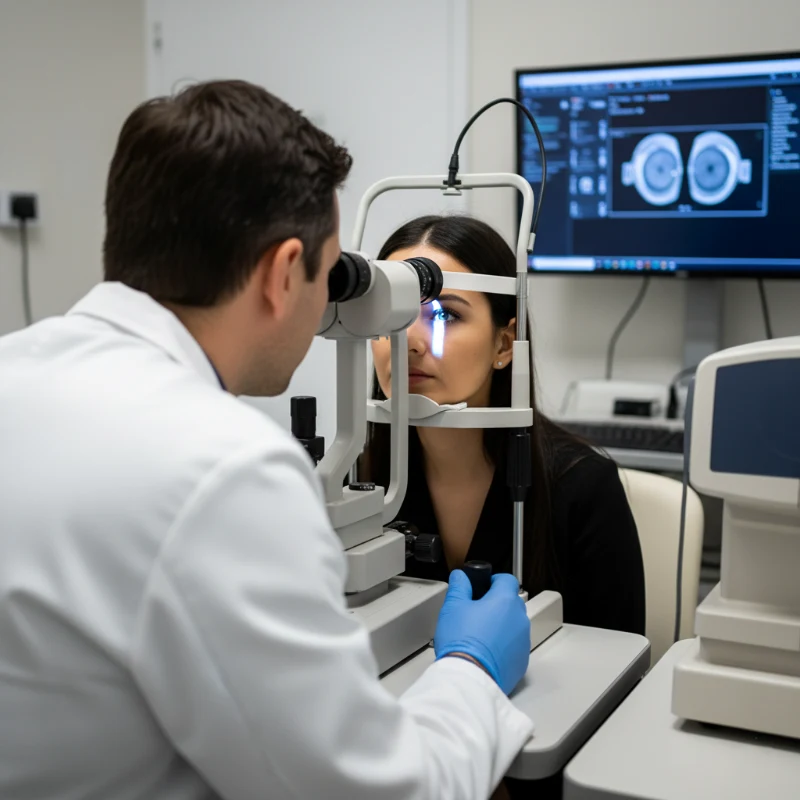
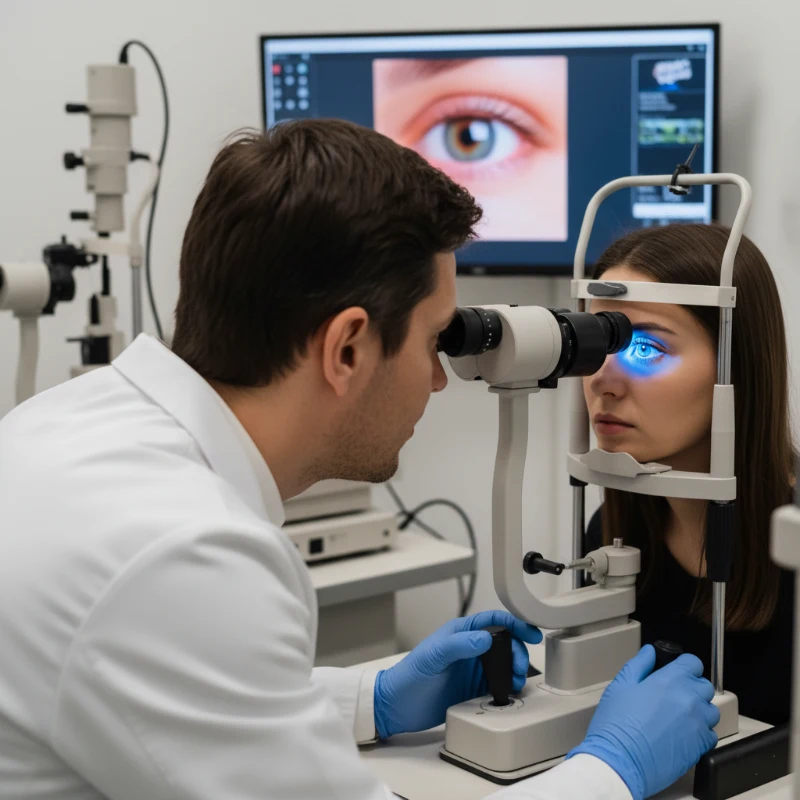
- Slit Lamp Examination: A highly magnified inspection of the anterior structures—eyelids, conjunctiva, cornea, iris, and lens—to check for dry eye, cataracts, or infections.
- Retinal/Posterior Segment Evaluation: The most critical step. Whether through dilation or Advanced Retinal Imaging, the doctor examines the retina and optic nerve for signs of systemic disease (diabetes, hypertension) and ocular disease (AMD, retinal tears). The inclusion of this step is why the cost of how much is an eye exam is justified as a medical necessity.
D. Deep Dive: Routine vs. Medical Billing The Real Determinant of Cost
The single biggest factor affecting how much is an eye exam you pay is not the fee structure, but how the visit is coded for insurance. This is a common point of confusion we aggressively clarify at Villages Opticals.
- Routine Visit: When the reason for your visit is “annual check-up” or “vision correction only,” it is billed to your Vision Insurance. Your cost is typically just the Copay and the separate fee for the Refraction Eye Exam.
- Medical Visit: If you present with a medical complaint (e.g., sudden blurry vision, eye pain, floaters, flashing lights) or if the doctor must manage a chronic disease (e.g., glaucoma, cataracts, diabetic retinopathy), the visit is legally billed to your Medical Insurance. Your cost will then be subject to your Deductible and Copay, and is entirely dependent on your medical plan’s structure, often resulting in a higher out-of-pocket amount until the deductible is met.
- The Hybrid Exam: Often, a routine eye exam reveals a new medical condition (like high eye pressure). In this case, the refraction fee is still charged, but the remaining diagnostic tests and management are transitioned to be billed medically, ensuring comprehensive care. Understanding this distinction is key to anticipating how much is an eye exam will cost you.
Part IV: LSI & Long-Tail Authority—Making Eye Care Affordable
We use LSI keywords to demonstrate full topical coverage and address every budget-related concern surrounding the cost of a routine or comprehensive eye exam.
A. Utilizing Your Vision Benefits: Copays, Deductibles, and Allowances
Don’t let the complexity of insurance stop you from asking how much is an eye exam. Our dedicated billing specialists at Villages Opticals are masters at maximizing your benefits.
- Copay: Your fixed fee paid at the time of service for the eye exam. If your plan has a $\text{\$20}$ copay, that is all you pay for the routine exam portion.
- Deductible: The amount you must pay out-of-pocket before your medical insurance begins to cover costs. This is only relevant if your eye exam is billed medically.
- Allowance: A fixed dollar amount your vision plan provides toward contact lenses or eyeglasses each year. This is crucial for reducing the final cost of your prescription eyewear.
We accept all major vision plans, including VSP, EyeMed, and others common in the Village Opticals. Call us to verify your specific coverage and determine your exact out-of-pocket eye exam cost.
B. Flexible Spending Accounts (FSAs) and Health Savings Accounts (HSAs)
These accounts are a game-changer for budgeting the cost of an eye exam and related eyewear.
- Pre-Tax Dollars: Both FSAs and HSAs allow you to use pre-tax money for eligible healthcare expenses. Eye exams, contact lenses, and prescription glasses are all eligible.
- Use It or Lose It: For FSA holders, you must use your funds by the end of the year. Scheduling your eye exam with Villages Opticals in the last quarter is an excellent strategy to utilize these benefits before they expire.
C. The Contact Lens Fitting Cost Breakdown: Why the Price is Higher
Many patients ask: “How much is an eye exam when I wear contacts?” The cost is higher because a contact lens fitting is legally and medically required in addition to the comprehensive eye exam.
- Specialized Measurements: We must measure the precise curvature of your cornea (keratometry) to ensure the contact lens fits your eye’s unique shape.
- Solution and Lens Material Evaluation: We check your tears and corneal health to ensure the lens material and solution are compatible, which is critical for preventing eye infections.
- Trial and Follow-Up: The fee includes trial lenses and a necessary follow-up visit to confirm the fit and vision are perfect after you’ve worn the lenses for a period. This rigorous process is what defines a quality contact lens eye exam and justifies the additional fee.
D. Refractive Error Costs: Myopia, Hyperopia, and Astigmatism
The complexity of your refractive error can slightly influence the necessary time spent in the Refraction Eye Exam, indirectly impacting the final cost.
- Simple Nearsightedness (Myopia): Typically requires less fine-tuning during the subjective refraction, but precision is still critical.
- Farsightedness (Hyperopia): Often requires a more detailed approach, especially for older patients or children, as the eye’s natural focusing can mask the true error. A cycloplegic refraction (using drops to temporarily paralyze the focusing muscle) may be required for a definitive prescription, which can add a nominal fee for the drops and extended time.
- Astigmatism: The most time-consuming and technically demanding refraction. Our doctors at Villages Opticals are specialists in correcting complex astigmatism, which involves precisely measuring the two different curvatures of the eye. While the price of how much is an eye exam might be the same, the value derived from our meticulous correction of astigmatism is dramatically higher than that from a rushed chain.
Part V: Cost Scenarios—Answering “How Much Is an Eye Exam” for Every Patient
To truly demystify how much is an eye exam, here are three common scenarios detailing the estimated cost breakdown for patients at Villages Opticals in the [Villages Region] (cost components are illustrative).
Scenario 1: Routine Comprehensive Exam with Vision Insurance
| Service Component | Villages Opticals Fee | Your Vision Plan Covers | Your Out-of-Pocket Cost |
| Comprehensive Eye Exam | $\text{[Standard Fee]}$ | Covers the exam, subject to Copay | $\text{\$20}$ (Standard Copay) |
| Refraction Eye Exam | $\text{\$45}$ | None (Standard Exclusion) | $\text{\$45}$ |
| Total Estimated Cost | $\text{[Total Fee]}$ | – | $65 |
- Conclusion: This patient knows exactly how much is an eye exam a low, predictable fee.
Scenario 2: Medical Exam for Sudden Vision Change (No Vision Insurance)
| Service Component | Villages Opticals Fee | Your Medical Plan (Aetna/BCBS) | Your Out-of-Pocket Cost |
| Medical Office Visit (e.g., Sudden Floaters) | $\text{[Higher Medical Fee]}$ | Subject to Deductible/Copay | $\text{\$150}$ (e.g., after deductible met) |
| Refraction Eye Exam | $\text{\$45}$ | None (Standard Exclusion) | $\text{\$45}$ |
| Total Estimated Cost | $\text{[Total Fee]}$ | – | $195 |
- Conclusion: Because the visit was medically necessary, the patient pays their medical deductible/copay plus the separate refraction eye exam fee. This clarifies how much is an eye exam when billed as a medical visit.
Scenario 3: New Patient with Complex Contact Lenses (No Insurance)
| Service Component | Villages Opticals Fee | Insurance Coverage | Your Out-of-Pocket Cost |
| Comprehensive Eye Exam | $\text{[Standard Fee]}$ | None | $\text{\$180}$ |
| Refraction Eye Exam | $\text{\$45}$ | None | $\text{\$45}$ |
| Complex Contact Lens Fitting | $\text{\$125}$ | None | $\text{\$125}$ |
| Total Estimated Cost | $\text{[Total Fee]}$ | – | $350 |
- Conclusion: This shows the maximal cost for a non-insured, specialized patient. The patient understands how much is an eye exam when it includes high-value, necessary additions.
Part VI: Advanced Diagnostics & Technology: Justifying the Premium Price
The answer to how much is an eye exam at Villages Opticals is slightly higher than at a budget clinic because of our uncompromised investment in technology. These machines provide data that dramatically enhances early detection, a value that far exceeds their cost.
A. Optical Coherence Tomography (OCT)
This machine is the undisputed champion of preventative care. An OCT is a non-invasive imaging test that uses light waves to take cross-section pictures of your retina and optic nerve.
- Value Proposition: The $\text{OCT}$ allows our optometrists to detect early, subtle thinning of the optic nerve or retinal layers the absolute first signs of Glaucoma or Macular Degeneration often years before they can be seen visually or through simple pressure tests. The additional fee for this test is crucial for long-term sight preservation.
B. Corneal Topography
For patients asking how much is an eye exam with complex needs, this technology is non-negotiable. Corneal Topography maps the surface curvature of your cornea, much like a topographical map of a mountain.
- Value Proposition: This data is essential for:
- Precisely fitting specialty contact lenses (e.g., rigid gas permeable or scleral lenses).
- Screening for corneal diseases like Keratoconus, which can be easily missed in a standard eye exam but requires specialized management.
C. Digital Refraction Systems
We use only the latest automated digital phoropters. While they still require the patient’s subjective input, these systems reduce human error and maximize efficiency and precision. This commitment to modern tools ensures that the prescription derived from your refraction eye exam is the clearest and most comfortable possible.
Part VII: The Value Equation Why Your Eye Exam Cost is an Investment
The true cost of a cheap eye exam is potentially losing your vision. The expense of a comprehensive eye exam is minor compared to the cost of treating an advanced disease that could have been caught early.
A. Early Disease Detection: The Unseen Value of the Eye Exam
An eye exam is a primary tool for detecting systemic and ocular diseases, often before symptoms are present. This preventative care provides massive value:
- Glaucoma: The $\text{Tonometry}$ test, a standard part of our eye exam, detects high eye pressure. Early detection prevents irreversible vision loss.
- Diabetes and Hypertension: The optometrist can see changes in the retinal blood vessels during the eye exam that are the first signs of uncontrolled diabetes or high blood pressure, leading to timely referral to your primary care physician.
- Macular Degeneration (AMD): Early signs of this sight-threatening disease are often spotted years before symptoms appear, allowing us to implement preventative measures and monitor the condition aggressively.
B. The Refraction Factor: Investing in Performance
As detailed in your previous content, the Refraction Eye Exam is the key to performance.
- An inaccurate prescription (from a rushed, low-cost eye exam) means your eye muscles are constantly straining to compensate. The cost is chronic headaches, computer vision syndrome (digital eye strain), and reduced productivity.
- A Villages Opticals precision prescription is optimized for your digital life, distance driving, and reading, providing a performance-enhancing visual experience.
C. Pediatric Eye Exams (The Future Investment)
The cost of a pediatric eye exam is the cheapest insurance policy for a child’s academic success. Undetected refractive errors can lead to amblyopia (lazy eye) and poor performance in school. Our specialists in the Villages Opticals use specialized techniques, including cycloplegic refraction, to get a non-subjective, perfect prescription, ensuring the child’s visual development is on track.
Conclusion: Invest in Precision. Invest in Villages Opticals.
Asking “how much is an eye exam” is the right question. The cost of an eye exam should be measured not just in dollars, but in the value of prevention, precision, and performance.
At Villages Opticals in the Villages Region, we don’t strive to be the cheapest; we strive to be the most valuable. Our meticulous, comprehensive eye exams provide the definitive answer to how much is an eye exam by delivering a transparent price for an unparalleled service a prescription optimized for your life and a health screening that safeguards your sight for the future.
Don’t compromise your vision for a marginal discount.
Action Plan: Book Your Precision Refraction Today
Visit Our Store: 3479 Wedgewood Ln, The Villages, FL 32162, United States
The only way to get a definitive answer to how much is an eye exam for your specific situation (based on your insurance and needs) is to contact our office directly.